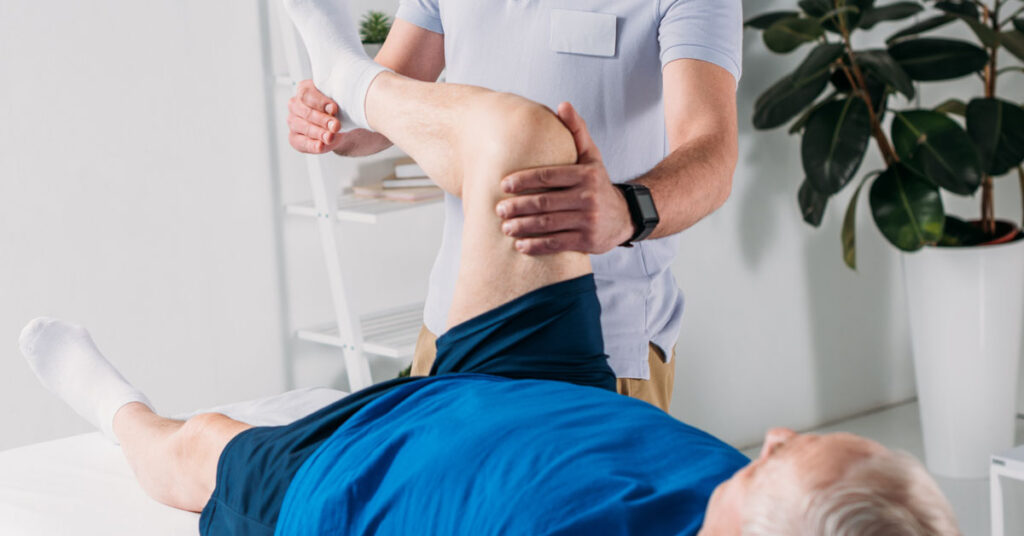
Yes, physical therapy can be an effective treatment for hip osteoarthritis (OA). A growing body of evidence shows that targeted exercises and hands-on treatment can reduce pain and improve function, and they’re widely recommended as first-line care for hip OA by clinical practice guidelines.
Exercise programs tailored to individuals, including strength, flexibility, and endurance, help enhance joint mobility, build supportive muscular strength, and reduce discomfort. Manual therapies, such as joint or soft-tissue mobilizations, are also commonly used to improve motion and ease pain when movement is limited.
Researchers led by Dr. Alexis Wright explored which patients with hip osteoarthritis are most likely to benefit from physical therapy. Their findings suggest that certain characteristics can predict a positive response to therapy:
They observed that having even one of these predictors was associated with a typical response to treatment. With two predictors present, the likelihood of a good outcome doubled, and when three were present, patients had about a 99% chance of a successful response to therapy.
The research team enrolled 91 patients from clinical settings, including both general medical practices and an orthopedic referral center where patients were being evaluated for possible surgery. Participants were randomly assigned to one of several groups:
Each physical therapy group received nine one-hour sessions. Success was defined as a reduction of three or more points on an 11-point pain rating scale one year after treatment.
Patients who received only usual medical care showed meaningful pain improvement in only about 2% of cases. In contrast, those treated with physical therapy experienced significant pain relief after one year in roughly 32% of cases, a substantial difference.
There’s solid evidence that exercise and manual therapy offer real benefits for many people with hip osteoarthritis, particularly when tailored to an individual’s abilities and symptoms. Both types of therapy aim to reduce pain, improve joint movement, and help you stay active, which can slow progression of symptoms and delay the need for more invasive treatments.
If hip pain or stiffness is limiting your daily activities, consider talking with a physical therapist about an evaluation and personalized treatment plan, it’s often a safe and effective first step.
Sources:
Pinto D, Robertson M, Abbott J, et al. Manual therapy, exercise therapy, or both, in addition to usual care, for osteoarthritis of the hip or knee. 2: economic evaluation alongside a randomized controlled trial. Osteoarthritis and Cartilage. joca.06.014.
Hernandez-Molina G, Reichenbach S, Zhang B, et al. Effect of therapeutic exercise for hip osteoarthritis pain: results of a meta-analysis. Arthritis Rheum. 58: 1221-1228.
Hoeksma H, Dekker J, Ronday H, et al. Comparison of manual therapy and exercise therapy in osteoarthritis of the hip: a randomized clinical trial. Arthritis Rheum. 51: 722-729.
Osteoarthritis NICE. The Care and Management of Osteoarthritis in Adults. London: National Institute for Health and Clinical Excellence.
Wright A, Cook C, Flynn T, et al. Predictors of response to physical therapy intervention in patients with primary hip osteoarthritis. Physical Therapy. 94 (4): 510-524.
{{head}}